


News and Events

Webinar – Communicating Across Sectors on the Social Determinants of Health: The Building Blocks of Health
This webinar explored how effective communication strategies can support cross-sector engagement by shaping how people understand the social determinants of health.

Collection – Municipal Governance and Public Health in Canada
Municipalities act on many factors that influence health and wellbeing, making them important partners for public health. This collection of fact sheets on municipal governance offers public health organizations guidance to help them engage more effectively in municipal processes.
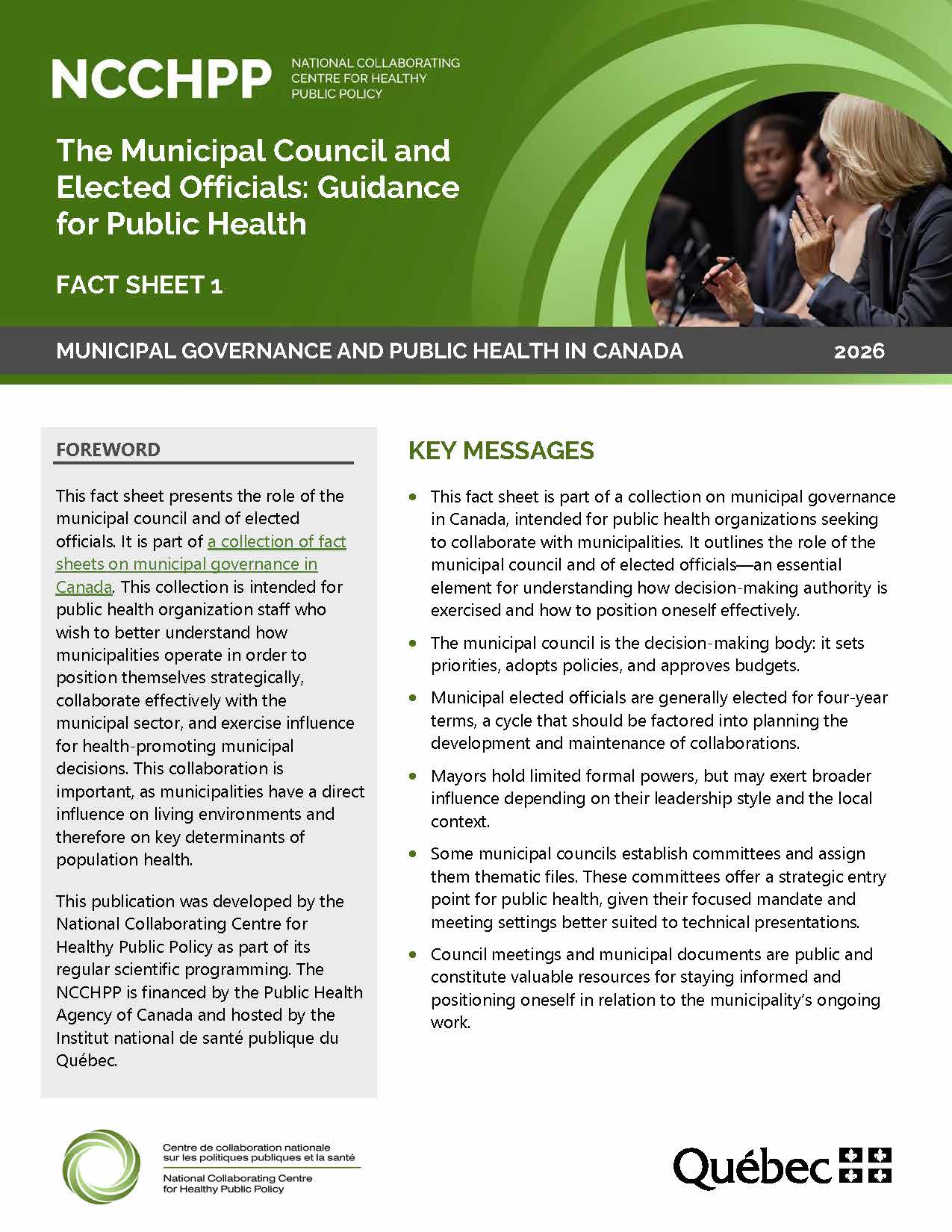
The Municipal Council and Elected Officials: Guidance for Public Health
Fact Sheet 1 in the Municipal Governance and Public Health in Canada collection presents the role of the municipal council and elected officials, and offers public health teams guidance to understand how to position themselves in relation to these bodies.
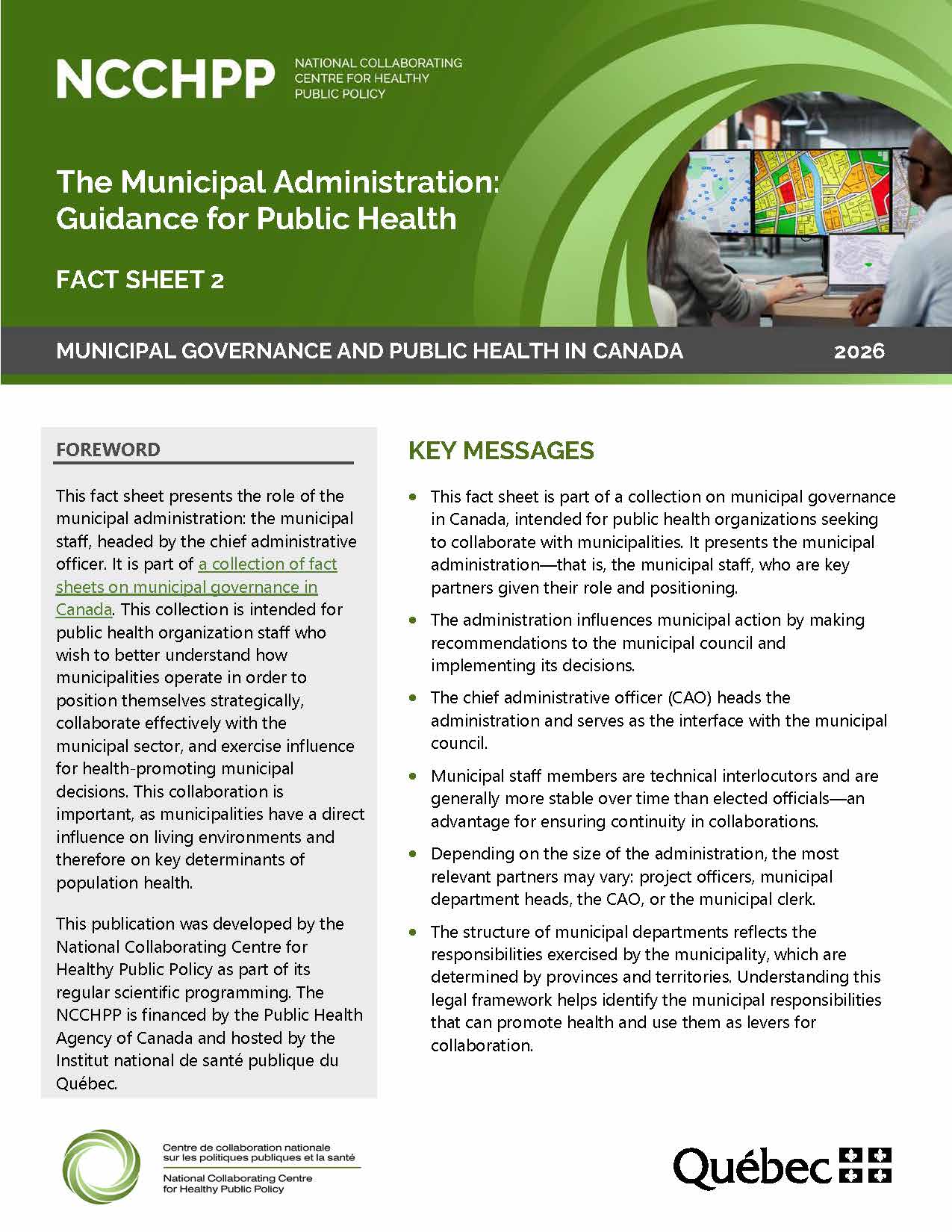
The Municipal Administration: Guidance for Public Health
Fact Sheet 2 in the Municipal Governance and Public Health in Canada collection presents the municipal administration and helps identify the most appropriate contacts for public health organizations.
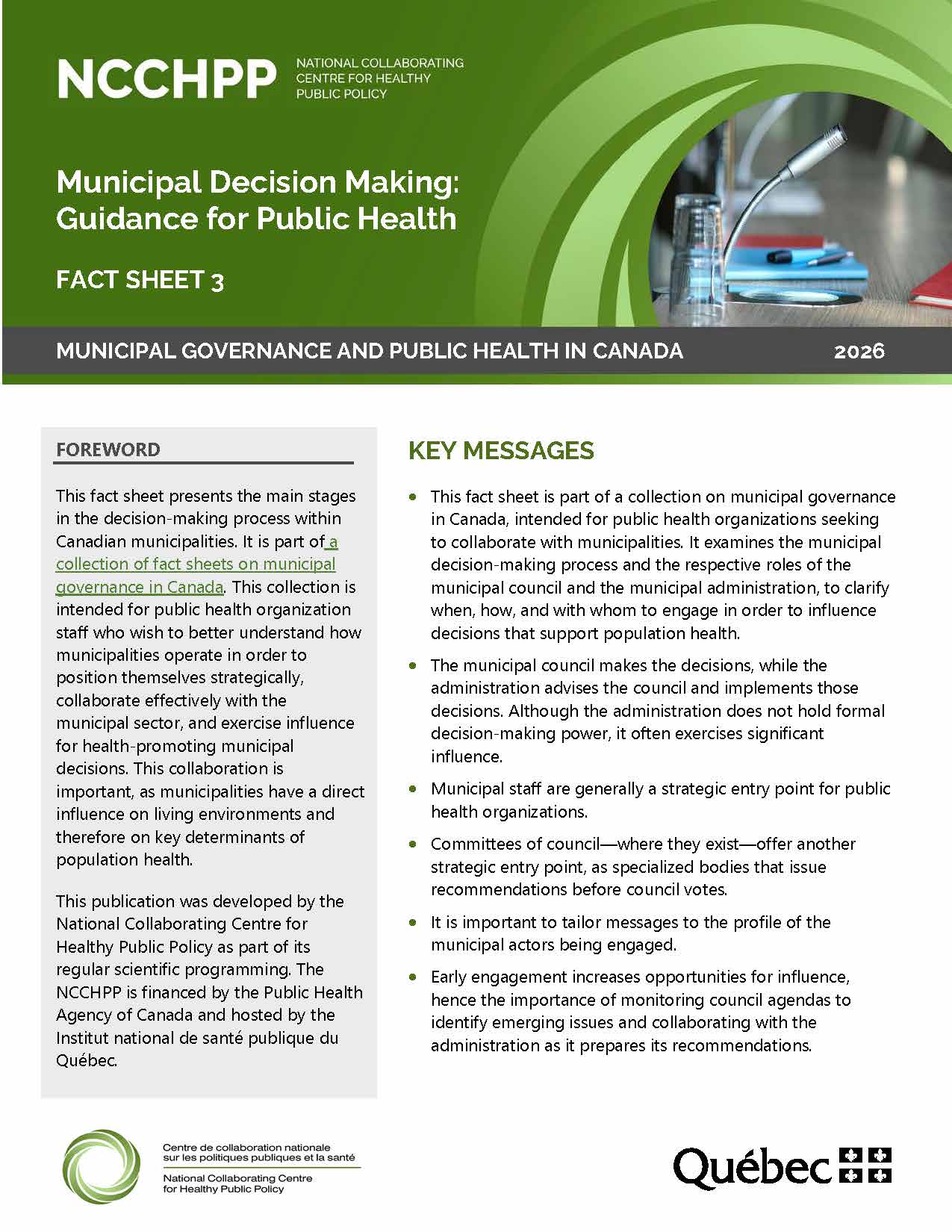
Municipal Decision Making: Guidance for Public Health
Fact Sheet 3 in the Municipal Governance and Public Health in Canada collection describes the municipal decision‑making process and offers guidance on when, how, and with whom public health organizations can engage to become involved in this process.
The Municipal Budget: Guidance for Public Health
To be released in the coming months. This will be the fourth fact sheet in a collection on municipal governance in Canada that aims to explain municipal dynamics and processes in order to guide public health organizations in their collaborative efforts with municipalities.

Public Participation in Municipal Affairs: Guidance for Public Health
To be released in the coming months. This will be the fifth fact sheet in a collection on municipal governance in Canada that aims to explain municipal dynamics and processes in order to guide public health organizations in their collaborative efforts with municipalities.

Approaches to Strengthen Collaboration with Municipalities: Guidance for Public Health
To be released in the coming months. This will be the sixth fact sheet in a collection on municipal governance in Canada that aims to explain municipal dynamics and processes in order to guide public health organizations in their collaborative efforts with municipalities.
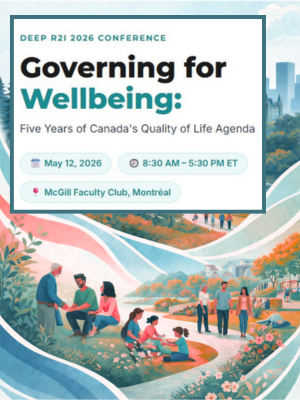
Governing for Wellbeing: the NCCHPP at the DEEP R2I 2026 Conference
The NCCHPP was at the DEEP R2I 2026 Conference – Governing for Wellbeing: Five Years of Canada’s Quality of Life Agenda. This event examined the Framework’s impact on public policy and decision-making. Our colleague Val Morrison, Scientific Advisor at the Centre, took part in the panel Interdisciplinary Alignment on Wellbeing Policy.
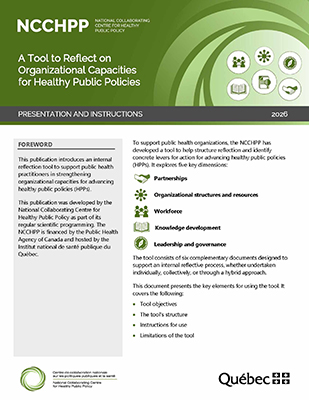
A Tool to Reflect on Organizational Capacities for Healthy Public Policies
Are you looking to strengthen your organization’s actions on healthy public policies (HPPs)? This tool will help you to structure your reflection, identify priorities, and target concrete, realistic actions!